

 Content Writer: Janice Chew • Monday, 26/04/2026 - 15:05:11 - PM
In March 2026, Paradise Co Ltd reported casino revenue of KRW49.5 billion (US$32.8 million), marking a steep 39.6% year-on-year decline and an even sharper 44.0% drop month-on-month.
For a leading operator in South Korea, this is not just a weak month—it is a result that immediately stands out.
What makes it more intriguing is that the company did not provide a detailed explanation alongside its monthly release, leaving the market to interpret the underlying causes.
When More Play Doesn’t Mean More Revenue
Despite the sharp revenue decline, table drop actually increased.
In March:
- Drop (total bets): KRW587.7 billion (US$389 million)
→ 🔺 +9.7% month-on-month
This creates a critical contradiction:
More money is being wagered, yet significantly less revenue is being generated.
In gaming terms, this points to yield compression—either due to unfavorable win rates or a shift in player mix toward lower-margin segments.
VIP Weakness vs Mass Growth
The revenue breakdown highlights a clear divergence.
Table games revenue, the core driver of VIP profitability, fell sharply:
- KRW44.0 billion (US$29.1 million)
→ 🔻 -43.4% year-on-year
Meanwhile, machine revenue showed strong growth:
- KRW5.42 billion (US$3.6 million)
→ 🔺 +33.1% year-on-year
This suggests that while the mass and premium mass segments are gaining traction, they are still not large enough to offset the decline in high-value VIP play.
The Bigger Picture: Stability vs Volatility
Interestingly, the quarterly numbers paint a more stable picture.
For Q1 2026:
- Total casino sales: KRW229.7 billion (US$152 million) → 🔺 +1.8% YoY
- Table games: KRW214.7 billion → 🔺 +1.0% YoY
- Machine revenue: KRW14.9 billion → 🔺 +23.6% YoY
- Table drop: KRW1.76 trillion → 🔺 +3.6% YoY
This suggests that:
- The underlying demand is still intact
- But monthly performance is becoming increasingly volatile
A Premium Operator Under Pressure
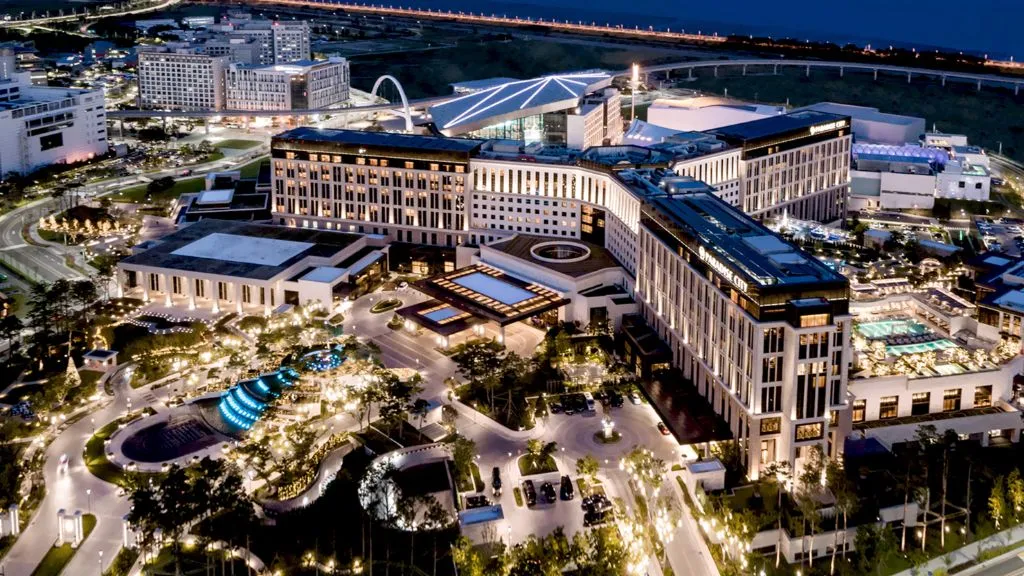
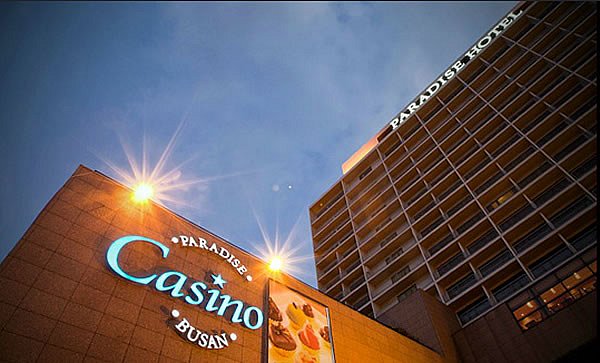
Paradise Co Ltd operates casinos in Seoul, Busan, and Jeju, and holds a 55% stake in Paradise City, the flagship integrated resort in Incheon developed with Sega Sammy Holdings.
Despite having one of the most premium assets in Korea, the March performance shows that even top-tier operators are not immune to market shifts.

The Structural Challenge in Korea
The core issue lies in the market structure.
Korea’s casinos operate under a foreigner-only policy, which fundamentally limits resilience.
Unlike markets such as:
- Macau
- Singapore
There is:
- ❌ No domestic player base
- ❌ No consistent recurring demand
- ❌ Heavy reliance on international VIP flows
This means that even when tourism improves, revenue can remain unstable.
The Experience Gap
Even with integrated resorts like Paradise City, the competitive bar has moved higher.
Take Marina Bay Sands as an example. Its strength lies in combining gaming with lifestyle, entertainment, and large-scale experiences that drive consistent engagement.
Korea’s model, while premium, is still evolving toward this level of ecosystem integration.
A Market in Transition
The March decline should not be viewed in isolation.
Together with similar trends seen in operators like Grand Korea Leisure, it highlights a broader shift:
- VIP-driven revenue is becoming less reliable
- Mass and machine segments are growing
- Yield volatility is increasing
Final Perspective
Paradise Co’s performance reflects a market at a turning point.
Demand is still there—but monetization is becoming more complex.
The takeaway is clear:
More betting activity does not guarantee higher revenue.
What matters is player mix, engagement, and conversion quality.
Closing Thought
For Paradise Co Ltd and the wider Korean market:
The challenge is no longer attracting players—
but building a model that can monetize them consistently.