
 Content Writer: Janice Chew • Thursday, 26/06/2026 - 22:49:02 - PM
Sands China is preparing to launch an AI Up-Skilling Programme aimed at helping management apply artificial intelligence in the workplace.
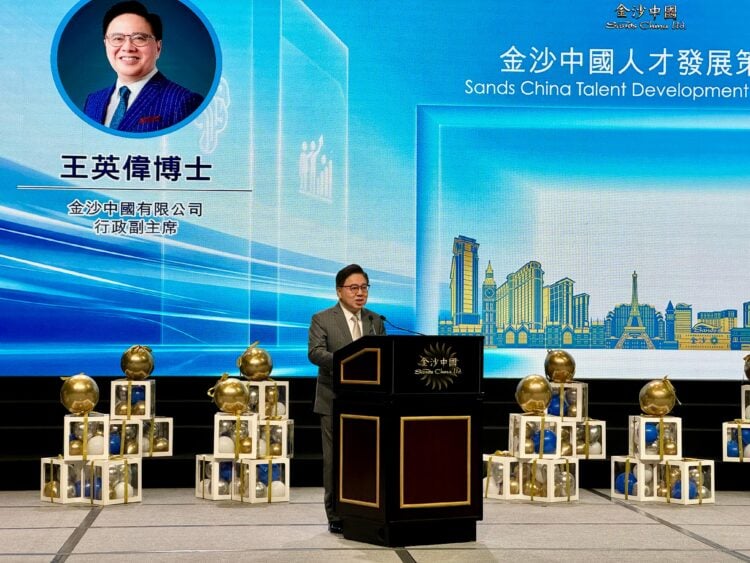
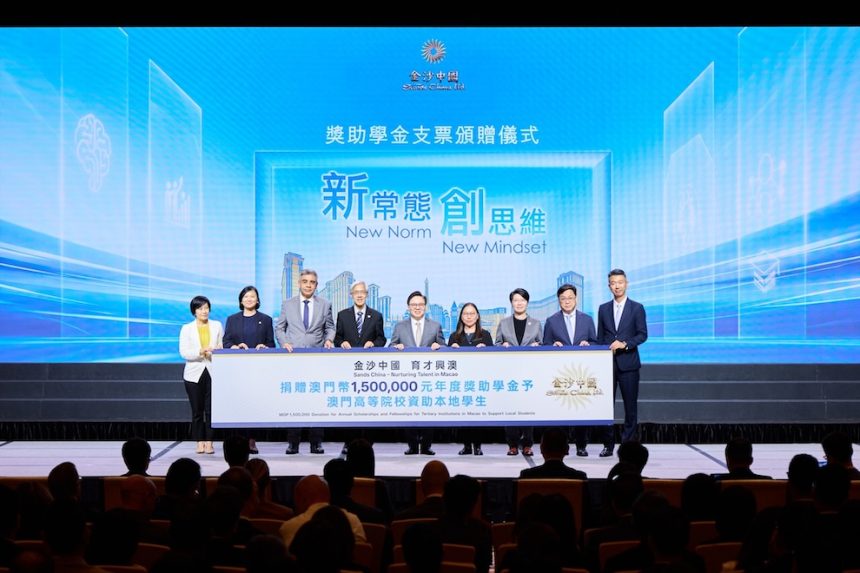
The initiative was introduced during Sands China’s two-day talent development showcase at The Londoner Macao, where the company presented new training pathways, leadership development programmes and talent initiatives to support Macau’s long-term diversification as a world centre of tourism and leisure.
At first glance, this looks like a corporate training programme. But the bigger message is much more important: AI adoption in integrated resorts is moving from the IT department into daily management, operations, service, marketing and leadership decision-making.
The Main Message: AI Is Becoming a Workplace Capability
Dr Wilfred Wong, Executive Vice Chairman of Sands China Ltd, said that most Sands China team members are now engaged in non-gaming roles, reflecting Macau’s push toward economic diversification.
He added that if team members want to move forward, they must do so with the latest technology.
His message is clear: AI is no longer only for engineers, system teams or digital specialists. It is becoming a core workplace capability for managers, supervisors and frontline leaders.
In the integrated resort industry, this matters because the business is highly complex. Hotels, casino operations, retail, food and beverage, events, MICE, entertainment, transportation, guest services and compliance all depend on fast coordination and smart decision-making.
AI can help leaders work faster, analyse better and improve customer experience — but only if management knows how to use it responsibly.
Speaker Insight: Wilfred Wong’s Focus on Talent and Technology
Dr Wong also said Sands China has invested for more than two decades in building a comprehensive talent cultivation ecosystem.
He highlighted that talent development is not only about professional knowledge and technical skills. It is also about building a mindset that actively seeks change and innovation.
This is an important point.
Many companies treat AI training as a software lesson: teach staff how to use a tool, then move on. But real AI transformation requires a mindset shift.
Managers need to ask better questions, understand where AI can improve workflows, know when human judgement is still required, and create teams that are open to new ways of working.
That is why Sands China’s programme is strategically meaningful. It is not simply about teaching AI commands. It is about preparing managers to lead in a more digital, data-driven workplace.
Why This Matters for Integrated Resorts
Integrated resorts are no longer just physical destinations. They are large operating ecosystems.
A modern integrated resort manages hotel rooms, gaming floors, luxury retail, restaurants, loyalty members, entertainment shows, events, conventions, transportation, customer service and digital channels.
Every department produces data. Every customer touchpoint creates an opportunity to improve service. Every operational delay affects the guest experience.
This is where AI can create real business value.
For example, AI can support demand forecasting for hotel occupancy, customer service response, workforce scheduling, marketing segmentation, loyalty personalisation, guest feedback analysis, procurement planning, maintenance prediction and internal knowledge search.
However, the technology alone is not enough.
The real value comes when managers understand how to apply AI to practical business problems.
The Marketing Lesson: AI Should Improve Relevance, Not Just Speed
From a marketing perspective, this move is highly relevant.
Many companies use AI only to produce faster content. That is useful, but it is a very basic use case.
The bigger opportunity is customer relevance.
In hospitality and gaming, AI can help marketing teams understand customer behaviour, segment audiences, personalise campaigns, identify high-value customers, improve email timing, analyse campaign performance and recommend better offers.
For example, instead of sending the same promotion to every guest, an integrated resort can use data to understand whether a customer is more interested in dining, hotel stays, entertainment, retail, gaming, spa, family activities or MICE events.
That creates better customer experience and better marketing ROI.
The future of resort marketing is not about shouting louder. It is about becoming more relevant.
Why Management Training Is the Right Starting Point
Sands China’s focus on management is smart.
If only technical teams understand AI, adoption will be slow. But if managers understand AI, they can identify practical use cases within their departments.
A hotel manager may use AI to analyse guest complaints.
A marketing manager may use AI to improve campaign segmentation.
A training manager may use AI to create learning pathways.
A facilities manager may use AI to predict maintenance issues.
A customer service manager may use AI to improve response quality.
A finance manager may use AI to detect reporting patterns.
This is how AI becomes part of the business, not just a technology trend.
Management training creates internal champions who can translate AI from theory into daily execution.
Macau’s Diversification Strategy and the Talent Angle
The programme also fits Macau’s broader direction.
Macau has been pushing integrated resorts to invest beyond gaming, with stronger emphasis on tourism, entertainment, conventions, cultural experiences, hospitality and professional talent development.
Sands China’s talent showcase included programmes across hotel management, premium service, culinary arts, transportation, leadership and AI.
This shows how the future of Macau’s integrated resort industry will depend on broader professional skills.
Gaming revenue remains important, but long-term competitiveness will also depend on service quality, innovation, digital readiness and workforce capability.
Original Insight: AI Training Is Becoming Employer Branding
There is also a strong HR and employer branding angle.
In today’s job market, employees want to know whether a company is preparing them for the future. AI training sends a strong signal that the company is investing in its people, not only in its properties.
For younger professionals, this matters.
They want career growth, modern skills, mobility and exposure to future-ready tools. A company that provides AI training, leadership development and cross-department learning becomes more attractive as an employer.
For AsiaJobMall, this is highly relevant because the future gaming and hospitality workforce will not only need operational experience. Employers will increasingly look for candidates who understand technology, data, customer experience, digital marketing and continuous learning.
Final Takeaway
Sands China’s AI Up-Skilling Programme is more than a training initiative.
It reflects a larger shift in the integrated resort industry: AI is becoming a core management skill.
The future of hospitality and gaming will not be shaped only by bigger properties, better rooms or more entertainment. It will also be shaped by smarter operations, stronger data use, faster decision-making and more personalised customer experiences.
Dr Wilfred Wong’s message is timely. To move forward, the workforce must move with the latest technology.
For integrated resort operators, the lesson is clear: AI transformation does not begin with the tool. It begins with leaders who know how to apply it.