 Content Writer: Janice Chew • Monday, 26/05/2026 - 22:31:37 - PM
South Korea’s only casino where locals are legally allowed to gamble, Kangwon Land, has delivered a mixed set of results for 1Q26 — strong revenue growth paired with a sharp decline in profitability.
This contradiction is becoming a defining theme across the global gaming industry.
Strong Revenue Growth Driven by VIP Segment
Kangwon Land reported a 4.5% year-on-year increase in Gross Gaming Revenue (GGR) to KRW360.0 billion (US$244 million) in 1Q26.
- Slightly higher than KRW357.3 billion in 4Q25
- Growth primarily driven by its VIP Membership Club
At an operational level:
- VIP Membership Club revenue surged 27.6% YoY to KRW62.1 billion
- Mass table GGR dipped slightly by 0.6% to KRW159.4 billion
- Slot revenue grew modestly by 2.4% to KRW138.5 billion
Meanwhile, player activity remained healthy:
- Drop amount increased 3.2% to KRW1.50 trillion
- Visitor numbers rose slightly to 625,916
On the surface, this is a healthy, demand-driven business.
But Profit Collapsed — Why?
Despite stronger top-line performance, Kangwon Land recorded:
- Net profit down 46.8% YoY
- Down 41.4% QoQ
- Totaling just KRW39.7 billion (US$26.9 million)
The primary drivers:
1. Higher Corporate Taxes
A factor often overlooked by investors but critical in heavily regulated markets like South Korea.
2. Rising SG&A Expenses
Selling, General & Administrative costs are climbing — reflecting:
- Increased marketing spend
- Higher staffing costs
- Greater reinvestment into player acquisition and retention
This confirms a key industry shift:
Revenue growth now requires heavier spending to sustain.
VIP Growth vs Mass Market Weakness
One of the most interesting signals here is the divergence:
- VIP segment: +27.6% growth
- Mass tables: -0.6% decline
This suggests Kangwon Land is:
Successfully attracting higher-value players
But potentially losing momentum in the broader mass segment
This mirrors trends seen in Macau, where operators are aggressively targeting premium mass and VIP segments for higher yield.
Non-Gaming Revenue: A Missed Opportunity?
Non-gaming revenue — including hotel, ski, golf, and Water World — declined 1.8% to KRW48.6 billion.
This is significant because:
Integrated resorts globally are increasingly relying on non-gaming diversification to stabilize earnings.
Kangwon Land’s slight decline suggests:
- Either weaker tourism demand
- Or under-optimized non-gaming monetization
Strategic Pivot: KRW200 Billion Investment
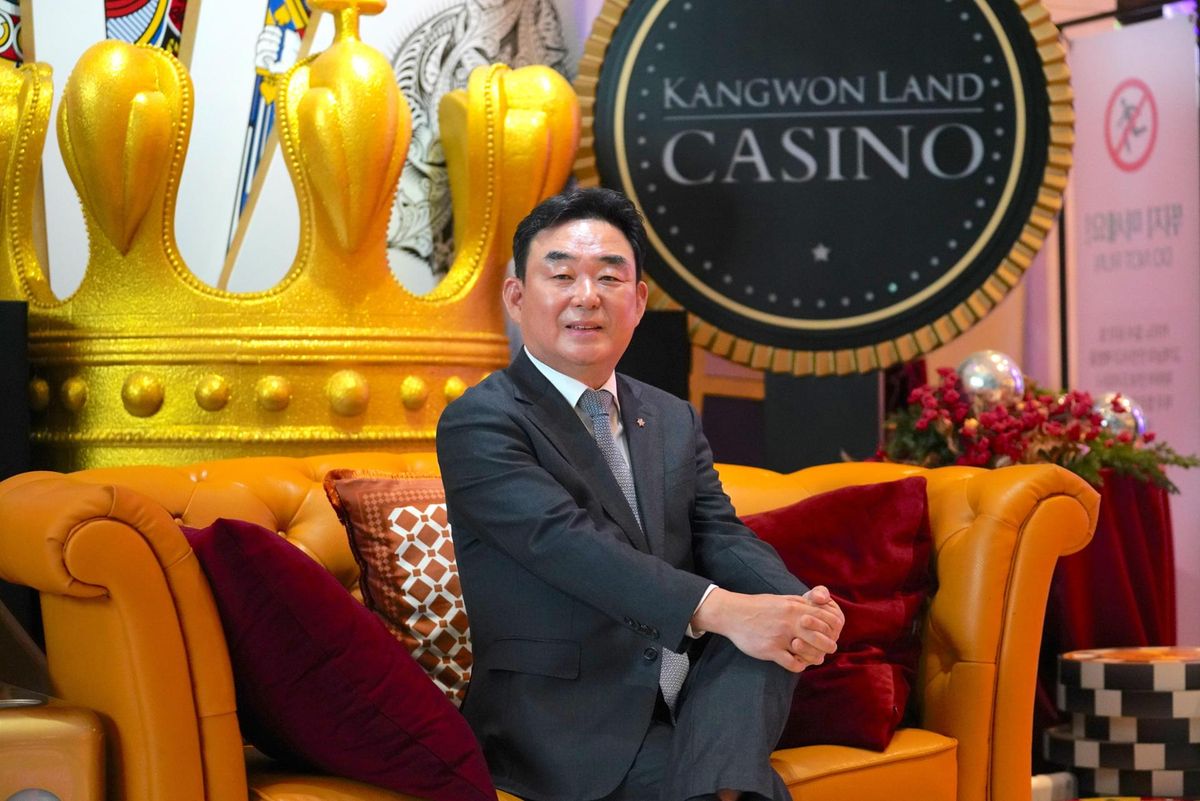
Under newly appointed interim CEO Nam Han-gyu, the company is making a bold move:
KRW200 billion (US$136 million) investment
Largest guest room renovation in its history
This signals a clear strategic direction:
- Upgrade asset quality
- Target premium customers
- Compete on experience, not just gaming
Industry Insight: The Real Story Behind the Numbers
Kangwon Land is not underperforming — it is transitioning.
What we’re seeing is a classic industry evolution:
Phase 1 (Old Model):
- Drive volume
- Maximize GGR
Phase 2 (Current Reality):
- Spend more to acquire/retain players
- Invest in property upgrades
- Accept short-term margin compression
Profit drops are often the cost of repositioning for long-term growth.
Final Take: A Warning and an Opportunity
Kangwon Land’s results highlight a powerful truth:
Growth without efficiency is dangerous.
But for forward-looking operators, this is also an opportunity:
- Invest in smarter systems
- Improve customer segmentation
- Optimize reinvestment strategies
Because in today’s gaming landscape:
t’s not about how much players spend —
it’s about how much you keep.