
 Content Writer: Janice Chew • Monday, 26/09/2026 - 17:25:18 - PM
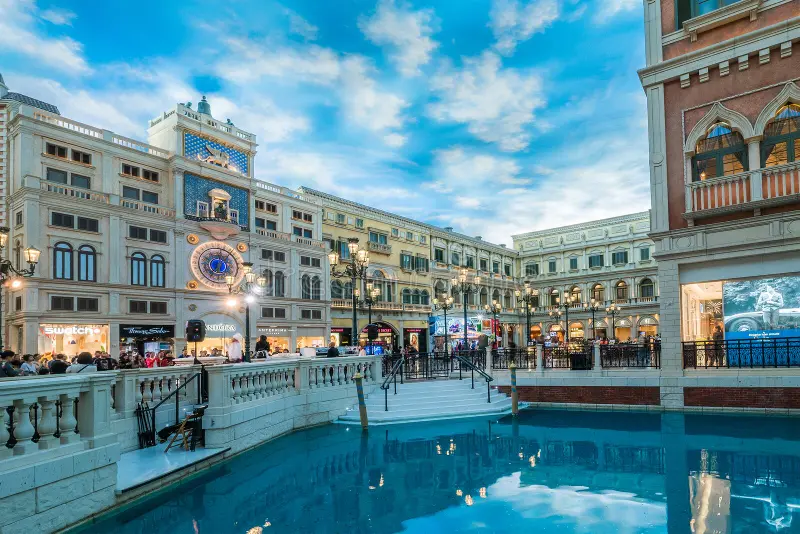
The numbers coming out of Macau’s retail sector are staggering. According to recent statements from Sands China Executive Vice Chairman Wilfred Wong, the shopping mall at The Venetian Macao now accounts for roughly 40% of Macau’s total retail sales. For a city globally renowned for its luxury boutiques and sprawling integrated resorts, having a single property capture such a massive share of the market is nothing short of extraordinary.
Behind the Numbers: A Retail Powerhouse
The financial metrics from Las Vegas Sands’ recent filings paint a picture of aggressive, sustained growth. While many traditional malls struggle to maintain foot traffic, The Venetian Macao is moving in the opposite direction:
-
Surging Tenant Sales: Sales per square foot rose by an impressive 27.1% year-on-year, reaching $2,161 for the trailing 12 months ending June 30th.
-
Double-Digit Momentum: Overall retail sales at the mall have posted continuous double-digit annual growth.
-
Rising Occupancy: The mall’s occupancy rate climbed 4.2 percentage points, bringing it to a remarkably healthy 89.3%.
Adapting to the Modern Consumer
The success of The Venetian Macao isn't just a byproduct of foot traffic—it is the result of a fundamental shift in retail strategy. In a recent interview with Macau Daily, Wilfred Wong shared valuable insights on how physical retailers are surviving and thriving in an era dominated by e-commerce.
The E-commerce Challenge: Wong noted that today's visitors are highly informed. With immediate access to online information, consumers often know exactly what a product should cost before they ever set foot inside a store, making competitive pricing more crucial than ever.
The Value of Experience: To combat the convenience of online shopping, Wong emphasized that physical retailers must evolve past basic transactions. Sands China's tenants have remained remarkably resilient by pivoting toward an experiential model. Physical stores must provide bespoke services and immersive environments that simply cannot be replicated on a screen, catering directly to consumers who prioritize the holistic shopping journey.

The Macro Tailwinds
Sands China's retail boom is buoyed by broader economic and travel trends shifting in Macau's favor. In the first half of 2026, the city welcomed nearly 21 million visitors—a 9% increase compared to the same period in 2025.
Wong highlighted that changing global travel economics are actually benefiting Macau. Higher airfares and fuel costs are prompting more tourists to opt for short-haul, regional travel. Many mainland Chinese visitors are choosing the convenience of taking the high-speed rail to Zhuhai before crossing the border. This influx resulted in summer hotel occupancy across the city's integrated resorts comfortably hovering above 90%, with weekends routinely selling out entirely.
Looking Ahead
Sands China is aggressively positioning itself to capitalize on a packed calendar of major events. Wong expects upcoming catalysts—including the National Day Golden Week, the Macau Grand Prix, and the Sands-hosted NBA China Games—to drive even further visitor growth through the end of the year.
Ultimately, the dominance of The Venetian Macao proves that brick-and-mortar retail is far from dead. By blending world-class entertainment, strategic pricing, and unparalleled in-store experiences, Sands China has created a retail ecosystem that isn't just surviving the digital age—it's leading it.